

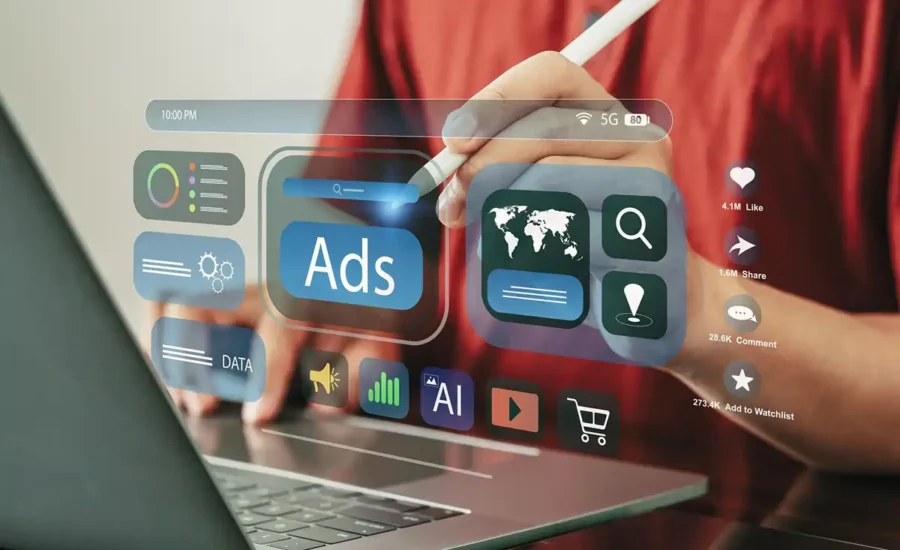
Artificial intelligence is no longer a futuristic concept in digital marketing. It is infrastructure. By 2026, AI is embedded in nearly every layer of marketing strategy — from audience targeting and ad optimization to content creation and customer experience. The shift is not about replacing marketers. It is about redefining what effective marketing looks like in an environment where machines can process data faster than any human team.
Digital marketing strategy in 2026 is shaped by a partnership between human creativity and machine intelligence. Businesses that understand how to manage that partnership gain efficiency, precision, and scale. Those that ignore it risk becoming invisible in a landscape driven by algorithmic decision-making.
AI as the Operating System of Marketing
In 2026, AI functions less like a tool and more like an operating system. Marketing platforms increasingly rely on machine learning models to automate decisions that once required manual intervention. Campaign bidding, audience segmentation, predictive analytics, and customer journey mapping are handled by intelligent systems designed to continuously self-improve.
This automation allows marketers to shift focus away from mechanical tasks and toward strategy. Instead of adjusting individual bids or tweaking keyword lists, professionals concentrate on business goals, brand positioning, and creative direction. AI handles optimization at scale, but humans define purpose.
The result is a marketing ecosystem where speed and adaptability become competitive advantages. Campaigns adjust in real time based on performance signals, market behavior, and emerging trends.
Hyper-Personalization Becomes Standard
Consumers in 2026 expect marketing to feel tailored. Generic messaging is increasingly filtered out by attention fatigue. AI enables hyper-personalization by analyzing vast datasets to understand behavior patterns, preferences, and intent.
Personalization now extends beyond inserting a name into an email. AI customizes product recommendations, ad creative, website layouts, and content delivery in real time. Two users visiting the same site may experience entirely different interfaces optimized for their interests.
This level of personalization changes strategy. Marketers must think in terms of adaptive experiences rather than static campaigns. The goal is no longer broadcasting a single message to a mass audience. It is designing dynamic systems that respond to each individual interaction.
Privacy regulations add complexity, but transparency builds trust. Successful brands use AI responsibly, making personalization feel helpful rather than invasive.
Predictive Marketing and Anticipatory Strategy
AI in 2026 does not just analyze past behavior; it forecasts future actions. Predictive analytics identify which customers are likely to convert, churn, or engage long before those outcomes occur.
This predictive capability transforms budgeting and resource allocation. Marketing teams invest based on probability models instead of guesswork. Campaign timing becomes strategic. Offers reach consumers at moments when they are most receptive.
Anticipatory marketing reduces waste. Instead of reacting to performance data after campaigns run, businesses proactively design initiatives informed by AI-driven forecasting. Strategy shifts from reactive optimization to forward planning.
Content Creation at Scale
AI-generated content is common in 2026, but the landscape is nuanced. Automation produces drafts, outlines, and variations rapidly. However, quality still depends on human oversight.
The most effective strategies use AI as an accelerator rather than a replacement. Marketers leverage automation to generate volume, then refine content with expertise and brand voice. This hybrid model increases output without sacrificing authenticity.
Content strategy becomes modular. AI assembles personalized versions of articles, ads, and landing pages tailored to user segments. Instead of one universal message, brands deploy thousands of micro-variations optimized for performance.
The emphasis shifts from production effort to editorial judgment. Human creativity remains the differentiator that separates memorable brands from automated noise.
AI-Driven Advertising Optimization
Advertising platforms in 2026 operate largely on autonomous optimization. AI determines audience targeting, bidding strategies, creative rotation, and placement selection based on performance signals.
Marketers increasingly define objectives rather than tactics. They provide goals — conversions, revenue, brand awareness — and allow intelligent systems to execute pathways toward those outcomes.
This changes how agencies measure expertise. Success is no longer tied to manual adjustments but to strategic framework design. Professionals must understand how to guide AI systems effectively, feeding them accurate data and meaningful constraints.
Campaign management evolves into system supervision. The marketer becomes architect instead of operator.
Conversational Marketing and AI Interfaces
Chatbots, virtual assistants, and conversational AI redefine customer interaction in 2026. Businesses deploy intelligent interfaces capable of handling complex inquiries, guiding purchases, and resolving issues instantly.
These systems blur the line between marketing and customer service. Every interaction becomes an opportunity for engagement and brand reinforcement. AI conversations collect data that feeds back into marketing strategy, creating continuous feedback loops.
Conversational marketing prioritizes accessibility and responsiveness. Customers expect immediate answers. Brands that deliver frictionless dialogue gain loyalty and trust.
Human oversight ensures emotional nuance remains intact. AI handles efficiency, but empathy remains a strategic asset.
Data Strategy as Competitive Infrastructure
The companies winning in 2026 treat data as infrastructure. AI effectiveness depends entirely on the quality of information it receives. Clean, integrated datasets allow systems to produce accurate predictions and insights.
Marketing strategy increasingly includes data governance. Businesses invest in unified analytics platforms, cross-channel tracking, and ethical data practices. Fragmented information weakens AI performance.
Data literacy becomes a core skill. Teams must understand how algorithms interpret inputs and where biases can emerge. Strategy involves not only collecting information but shaping it responsibly.
Creative Strategy in an Automated Environment
As automation increases, originality becomes more valuable. AI can optimize patterns, but it cannot invent cultural relevance. Creative strategy anchors brand identity in a landscape dominated by algorithmic similarity.
Brands that stand out invest in storytelling, visual identity, and emotional resonance. AI supports execution, but human imagination defines differentiation.
Marketing in 2026 rewards boldness paired with precision. Creative risks are tested quickly through AI-driven analytics, allowing experimentation without catastrophic cost. Strategy becomes iterative, guided by rapid feedback.
Ethical Marketing and Consumer Trust
AI amplifies ethical responsibility. Consumers are more aware of data usage and algorithmic influence. Brands that misuse AI risk reputational damage.
Transparent communication builds trust. Clear privacy policies, honest advertising, and ethical automation strengthen long-term relationships. Strategy includes reputation management as a core pillar.
Trust is not a soft metric. It directly affects conversion rates and retention. AI makes marketing more powerful, but power demands restraint.
The Human Role in an AI Marketing Future
The rise of AI does not eliminate marketers; it elevates their role. Routine tasks disappear, but strategic thinking becomes more important. Professionals must interpret data, shape narratives, and make ethical decisions machines cannot.
The marketer of 2026 is a hybrid thinker — part analyst, part storyteller, part technologist. Success depends on adaptability and curiosity. Those who embrace continuous learning thrive in an evolving ecosystem.
AI handles complexity. Humans provide meaning.
Preparing for 2026 and Beyond
Businesses preparing for the future focus on integration rather than replacement. They build workflows where AI enhances existing strengths. Investment in training ensures teams understand how to collaborate with intelligent systems.
Forward-looking strategy includes experimentation. Early adoption allows companies to refine processes before competitors catch up. The learning curve favors pioneers.
The marketing landscape of 2026 rewards agility. Static strategies fade quickly. Adaptive organizations evolve alongside technology.
Conclusion
AI is not changing digital marketing at the edges. It is reshaping the foundation. Strategy in 2026 revolves around intelligent systems that automate optimization, personalize experiences, and predict behavior at unprecedented scale.
The winners are not those who fear automation, but those who direct it. Businesses that combine human creativity with machine precision create marketing ecosystems that are both efficient and meaningful.
Digital marketing is entering an era where intelligence is collaborative. The future belongs to brands that understand how to think with machines while still speaking to people.

